I am at the beginning of moving away from Windows, which I ancitipate will be a slow process.
Most computer users are familiar with two operating systems for home computers. The first, iOS, is owned by Apple and is generally perceived as a simpler, cleaner operating system. It is also seen as tightly controlled by Apple. It is also considered, by its critics, as artificially expensive, a status symbol which is deliberately made not to play kindly with other major tech companies. The second OS is Windows, owned by Microsoft. For decades Windows was used by the vast majority of consumers. It had more apps, more games, and more choices of hardware.
Across maybe the last ten years, Windows has lost a lot of its former popularity because of changes Microsoft has made which are increasingly hostile to the end user. I have no interest in iOS. But my frustration with Windows has grown significantly. The user interface is wildly inconsistent in places, with a lot of unnecessary redundancy and some components having received virtually no updates (both visually and functionally) since the early 2000s. Microsoft has pushed hard for users to adopt their ‘AI’ (which I adamantly refuse), while simultaneously filling the OS with ads and other bloat. Alleged insiders have shared rumors that the next major version of the OS will double down on this path while also requiring a subscription to use it (without having ads? it wouldn’t be surprising if Microsoft double-dipped).
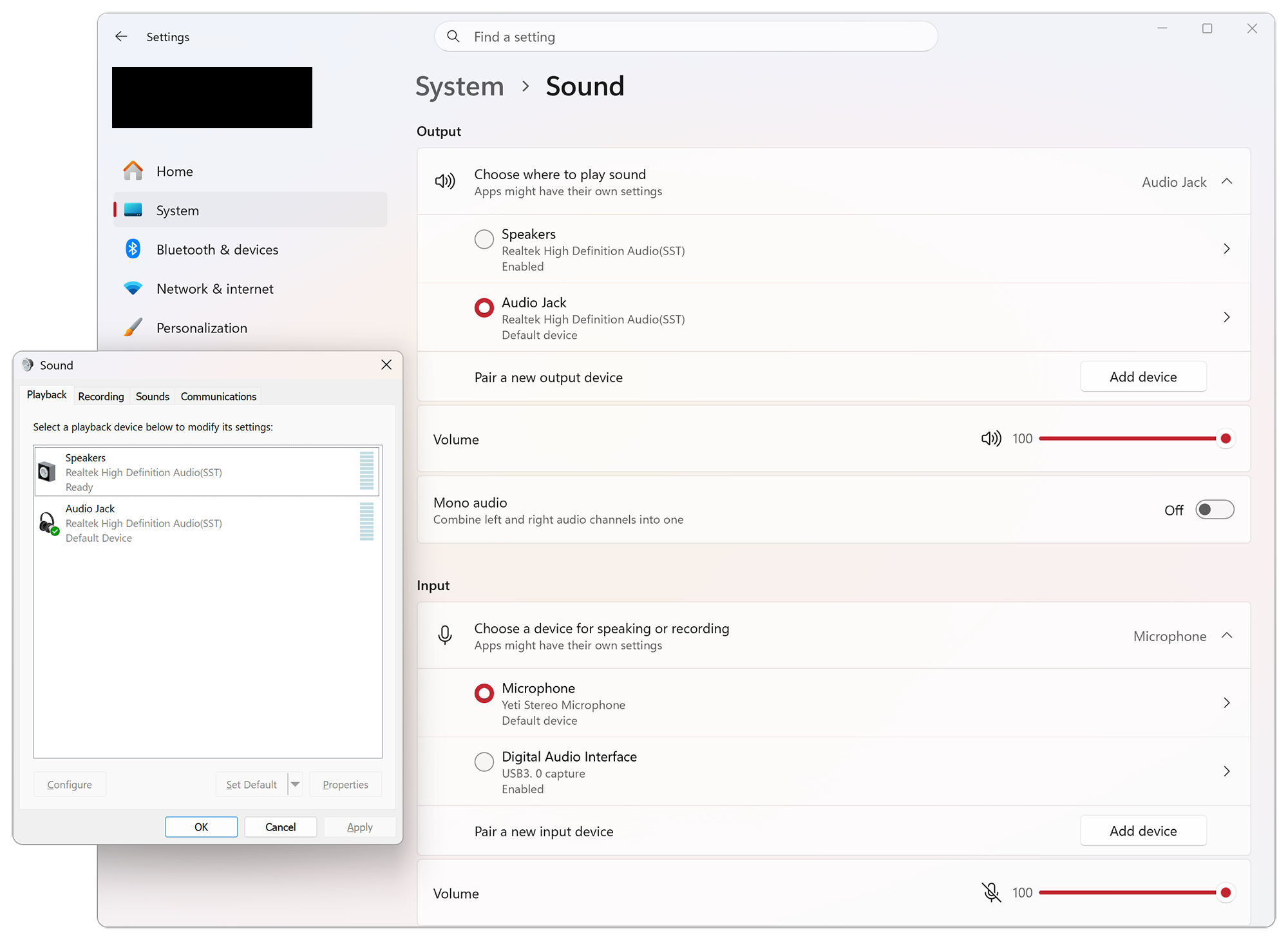
These two windows, captured in a single screenshot, perform nearly the exact same functions, controlling audio settings for the system and connected devices. The small one is the ‘legacy’ equivalent of the larger one. It’s needlessly redundant.
In the past, I dabbled with the third option: Linux. The above rumors, based in reality or not, are believable enough that I want to get ahead of the current trend and move away from Windows regardless.
Linux is open source, so it is not really owned by any one company, and is actually more of an umbrella term for a wide range of operating systems built on the same code foundation. Different versions of Linux are called ‘distributions’ (with many of the most popular ones having their own spin-off distributions), and most of them have different user-side interfaces which can be swapped out, called ‘environments’. The most popular smartphone OS, Android and all its iterations, is a version of Linux.
I am currently trying out Ubuntu on a secondary computer. For daily use—e.g. internet, chat, music—the switch was simple. Many basic apps on Windows (or iOS) are also available on Linux, so most of my preferred apps were easy to find or replace. The difficulty will spike considerably once I try finding alternatives to my preferred apps for illustration and design (Adobe Photoshop), photo editing (Adobe Lightroom), and document editing (Affinity Publisher).